Why My Website Isn’t in Google AI Overviews?
Why Isn’t My Site Showing Up in Google AI Overviews (And How to Fix It)

Why Isn’t My Site Showing Up in Google AI Overviews (And How to Fix It)

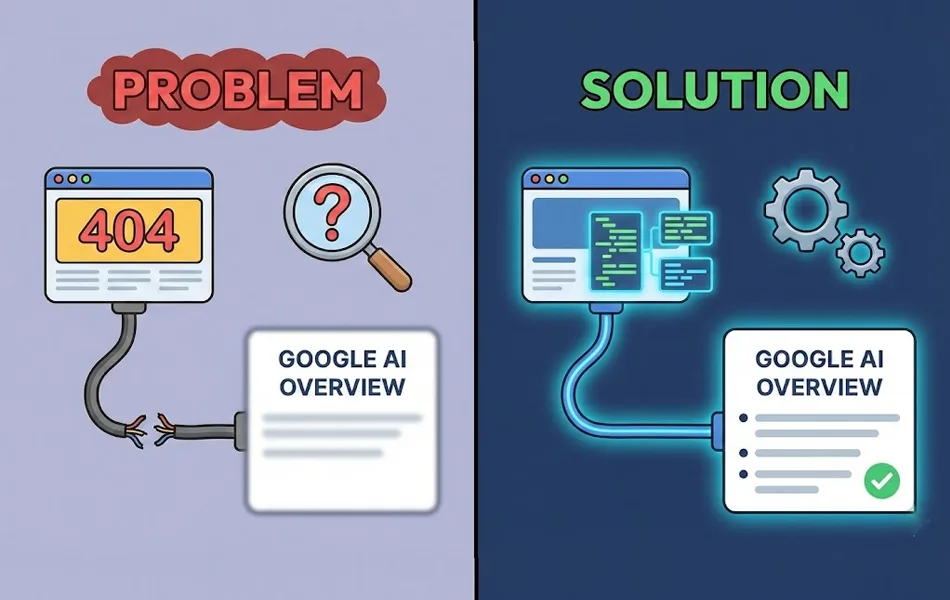
If your website ranks on Google but isn’t showing up in Google AI Overviews, you’re not alone—and no, it’s not a coincidence. By 2025, Google search will have undergone fundamental changes. With the global rollout of Google AI Overviews, users now see AI-generated answers at the top of search results, often before traditional organic listings. For many businesses, this shift has led to sudden drops in clicks, traffic, and inbound leads, even when their SEO rankings haven’t technically declined.

What’s important to understand is this: Google AI Overviews don’t pull information randomly. They rely on signals like topical authority, content clarity, structured data, and real-world trust indicators (E-E-A-T: Experience, Expertise, Authoritativeness, and Trustworthiness). Websites optimized solely for traditional SEO—keywords, backlinks, and rankings—are often invisible in AI search results unless they adapt to AI search optimization and Answer Engine Optimization (AEO).

In 2025, Google has made it clear through multiple core updates and AI integrations that its goal is to surface accurate, expert-backed, and clearly explained content directly within AI answers. That’s why many business websites struggle with Google AI Overviews SEO, even though they’ve invested heavily in SEO before. The rules haven’t disappeared—but they’ve evolved.
In this guide, we’ll break down why your website isn’t appearing in Google AI Overviews, how Google selects sources for AI-generated answers, and how to optimize your website for Google AI Overviews using proven AI SEO and AEO strategies that work in 2025.

In this guide, we’ll break down why your website isn’t appearing in Google AI Overviews, how Google selects sources for AI-generated answers, and how to optimize your website for Google AI Overviews using proven AI SEO and AEO strategies that work in 2025.

What Are Google AI Overviews and Why Do They Matter?

Google AI Overviews are AI-generated summaries that appear at the top of search results for many informational and commercial queries. Instead of showing only blue links, Google now uses artificial intelligence to analyze multiple trusted sources and present a concise, direct answer to the user’s question.

From an SEO perspective, this is a major shift. In 2025, Google AI Overviews often appear above traditional organic listings, meaning users can get answers without clicking any website. This is why many businesses feel their traffic hasn’t dropped because of ranking loss—but because visibility has moved to AI-powered results.

How Do Google AI Overviews Work?

Google’s AI systems scan indexed content and prioritize pages that:

  • Clearly answer specific questions
  • Demonstrate real expertise and experience
  • Come from trusted, authoritative sources
  • Use structured, easy-to-understand formats

Rather than ranking pages purely on keywords, AI Overviews rely on semantic relevance, entity relationships, and content clarity. This is where Google AI Overviews SEO and AI search optimization become critical.

Is Google AI Replacing Organic Search?

No! It’s reshaping it.

Traditional organic results still exist, but AI Overviews act as a new visibility layer. Websites that adapt to this change can gain:

  • Brand exposure inside AI answers
  • Authority signals even without direct clicks
  • Higher trust among users who see them referenced

Websites that don’t adapt risk becoming invisible, even if they rank on page one.

Why Google AI Overviews Matter for Businesses?

For businesses and service providers, AI Overviews directly impact:

  • Website traffic
  • Lead generation
  • Brand credibility
  • Competitive positioning

If your website doesn’t appear in Google AI Overviews, you’re competing for less attention than before. This is why modern SEO strategies now include Answer Engine Optimization (AEO) alongside traditional SEO.

Why Is My Website Not Showing Up in Google AI Overviews?

If you’re asking, “Why is my website not showing in Google AI Overviews?”, the answer usually isn’t a single issue – it’s a combination of content, authority, and technical SEO gaps. In 2025, Google AI Overviews favor websites that are optimized not just for rankings, but for AI understanding and trust.

Even websites ranking on page one can struggle with Google AI Overviews optimization if they rely only on traditional SEO tactics.

1. Your Content Isn’t Answer-Focused

AI Overviews prioritize content that directly answers search queries. If your pages are:

  • Overly promotional
  • Lacking clear explanations
  • Missing question-based headings

Google’s AI may skip them, even if they rank well organically. AI search optimization requires concise, factual, and well-structured answers.

2. Weak Topical Authority in Your Niche

Google AI systems prefer websites that consistently publish around a single topic or industry. If your blog content is scattered, Google may not view your site as an authoritative source worth citing in AI Overviews.

Building topical authority through content clusters is now a core part of SEO for Google AI Overviews.

3. Poor E-E-A-T Signals (Experience, Expertise, Authority, Trust)

E-E-A-T plays a bigger role in AI search than ever before. Websites lacking:

  • Author profiles
  • Real business details
  • Case studies or proof of expertise
  • Updated content

are less likely to appear in Google AI search results, regardless of rankings.

4. Missing or Incorrect Structured Data

Schema markup helps Google understand your content contextually. If your FAQ, Article, or Organization schema is not structured properly, your content may not be eligible for inclusion in AI Overviews.

This is a common technical gap in Google AI Overviews optimization.

5. Technical SEO Issues Limit AI Visibility

Slow page speed, crawl errors, weak internal linking, or indexation problems can reduce your site’s trust signals. Google AI relies on clean, accessible data. Technical SEO issues can quietly block your inclusion in AI answers.

This is why many businesses turn to AI SEO services to fix foundational issues before focusing on content.

6. Your Website Isn’t Optimized for AEO

Traditional SEO focuses on rankings. AEO focuses on answers. If your content isn’t structured for:

  • Question-based queries
  • Clear, short explanations
  • Semantic relevance

Your website may not appear in AI-generated answers, even if it ranks well.

How Does Google Choose Websites for AI Overviews?

A common question businesses ask is “How does Google choose sources for AI Overviews?” Unlike traditional rankings that rely heavily on links and keywords, Google AI Overviews use a broader evaluation system focused on trust, relevance, and clarity.

1. Topical Authority and Entity Relevance

Google AI prefers websites that cover a topic in depth, not just one-off blog posts. If your site regularly publishes content around a specific subject, Google can clearly associate your brand as an entity within that niche.

This is why topical authority has become a foundational element of Google AI Overviews SEO.

2. Clear, Factual, and Well-Structured Content

AI Overviews favor content that:

  • Directly answers the query
  • Uses simple language
  • Breaks information into digestible sections

Long, vague, or overly promotional content is less likely to be used in AI-generated answers, even if it ranks well organically.

3. Strong E-E-A-T Signals

Experience, Expertise, Authoritativeness, and Trustworthiness are critical in AI search. Google looks for:

  • Real authors with credentials
  • Business transparency (About, Contact, policies)
  • Updated and accurate information
  • Consistent branding across the web

Websites lacking these signals struggle to appear in Google AI search results.

4. Structured Data and Contextual Clarity

Structured data helps Google understand what your content is about and who it’s for. While schema doesn’t guarantee inclusion, it significantly improves eligibility for AI Overviews by providing contextual clarity.

5. Historical Performance and Content Reliability

Google also evaluates how your content performs over time. Pages that remain accurate, updated, and useful tend to gain more trust, increasing their chances of being referenced in AI Overviews.

Common SEO Mistakes That Prevent AI Overview Visibility

If your site is struggling with Google AI Overviews visibility, chances are one or more SEO mistakes are quietly holding it back. In 2025, these issues don’t just affect rankings—they directly impact whether Google’s AI considers your content reliable enough to reference.

Below are the most common mistakes that block Google AI Overviews SEO performance.

1. Writing for Keywords Instead of Answers

Many websites still focus on keyword density rather than clarity. AI Overviews prioritize direct, well-explained answers, not content written solely to rank. If your pages lack concise explanations, Google’s AI may skip them entirely.

2. Publishing Thin or Generic Content

Short, surface-level content rarely meets the quality threshold for AI Overviews. Pages without depth, examples, or real insights fail to demonstrate expertise or experience, which are essential for AI-generated answers.

3. Ignoring E-E-A-T Signals

Websites that don’t clearly show:

  • Who wrote the content
  • Why they’re qualified
  • How the business can be trusted

are less likely to be referenced by Google AI Overviews. Missing author bios, outdated pages, and unclear business information are major red flags in AI search.

4. Lack of Internal Linking and Topic Clusters

Without internal links and related content, Google struggles to understand your site’s topical focus. AI systems rely on content relationships, not isolated pages. This weakens your overall AI SEO signals.

5. Missing or Incorrect Schema Markup

Many websites either skip schema or implement it incorrectly. Without proper structured data, Google’s AI has less context to interpret your content, reducing your eligibility for AI Overviews.

6. Outdated Content That No Longer Reflects Current Search Behavior

AI Overviews favor fresh, accurate information. Pages written years ago without updates may still rank, but are often ignored by AI systems due to outdated facts or obsolete strategies.

Does Schema Markup Help With Google AI Overviews?

Yes! Schema markup does help Google AI Overviews, but not in the way many people expect. Schema doesn’t guarantee that your website will appear in AI Overviews, but in 2025 it plays a crucial role in helping Google’s AI understand, classify, and trust your content.

For effective Google AI Overviews SEO, structured data acts as a supporting signal that improves your content’s eligibility for AI-generated answers.

How Schema Supports AI Search Visibility?

Schema markup provides Google with explicit context about your page. Instead of guessing what your content means, Google’s AI can quickly identify:

  • What the page is about
  • Who the content is for
  • Who created it
  • How the information is structured

This clarity is especially important for AI-powered search engines, which rely on structured signals to generate accurate summaries.

Best Schema Types for Google AI Overviews

The most effective schema types for AI search include:

FAQ Schema – Helps AI extract direct question-and-answer content
Article Schema – Defines the main topic and publishing details
Organization Schema – Builds brand trust and entity recognition
Author Schema – Strengthens E-E-A-T signals
LocalBusiness Schema – Critical for local AI search visibility

Using the right schema types improves your chances of being considered a trusted source for AI Overviews.

Common Schema Mistakes to Avoid

Even when the schema is implemented, mistakes can reduce its impact:

  • Using irrelevant schema types
  • Marking up content that isn’t visible on the page
  • Leaving outdated or inaccurate schema
  • Not testing the schema for errors

An incorrect schema can confuse Google’s AI and weaken your AI SEO efforts.

Is Schema Alone Enough to Appear in AI Overviews?

No. Schema is a supporting factor, not a standalone solution. Without strong content, topical authority, and E-E-A-T signals, schema alone won’t help your site appear in Google AI search results.

Think of a schema as a translator—it helps Google’s AI understand your content, but the content still needs to be worth showing.

How to Optimize Your Website for Google AI Overviews

If you want to improve visibility in AI-powered search, you need more than traditional SEO. In 2025, Google AI Overviews optimization requires a blend of AI SEO, AEO, content clarity, and technical excellence.

Below are proven steps that directly support Google AI Overviews SEO.

1. Write Content That Directly Answers User Questions

Structure your content around real search questions, not just keywords. Use:

  • Question-based H2 and H3 headings
  • Clear, concise answers within the first few lines
  • Simple, factual explanations

AI Overviews prioritize content that solves the query fast and accurately.

2. Build Topic Clusters, Not Isolated Pages

Google’s AI looks for topical authority. Instead of publishing random blogs, create clusters that support a main topic. Internally link related articles to signal expertise and relevance.

This approach strengthens your AI search optimization efforts over time.

3. Strengthen E-E-A-T Signals Across Your Website

To build trust with Google AI:

  • Add author bios with credentials
  • Keep content updated
  • Include real business details
  • Showcase experience, case studies, or insights

These signals help Google identify your website as a reliable source.

4. Optimize Existing Content for AI Search

You don’t always need new content. Update high-performing pages by:

  • Adding direct answers at the top
  • Improving formatting and readability
  • Including FAQs
  • Adding internal links

Refreshing content often delivers faster AI visibility gains.

5. Implement the Right Structured Data

Use schema markup to provide contextual clarity. Focus on:

  • FAQ schema
  • Article schema
  • Organization & Author schema

This helps Google’s AI interpret your content correctly.

6. Fix Technical SEO Issues That Block AI Visibility

  • Fast and mobile-friendly
  • Properly indexed
  • Free of crawl errors
  • Well internally linked

Technical SEO remains a foundation of Google AI Overviews SEO.

Is AEO Different From SEO? (And Why It Matters for AI Search)

Yes, Answer Engine Optimization (AEO) is different from traditional SEO, but it doesn’t replace it. AEO and SEO work together to improve visibility across both organic search results and AI-generated answers.

Aspect Traditional SEO Answer Engine Optimization (AEO)
Primary Goal Rank webpages in organic search results Get content selected as direct answers in AI Overviews
Focus Area Keywords, backlinks, rankings Clear answers, context, and AI readability
Search Behavior Targeted Users clicking blue links Users consuming AI-generated summaries
Content Structure Long-form, keyword-optimized pages Question-based, concise, structured answers
Role of Keywords Important for rankings Supporting role, not the main focus
Importance of E-E-A-T High Critical for AI trust and visibility
Schema & Structured Data Helpful but optional Essential for AI understanding
Internal Linking Improves crawlability Builds topical authority for AI selection
Best Use Case Traditional Google search results Google AI Overviews, ChatGPT, AI search engines

How Long Does It Take to Appear in Google AI Overviews?

Many businesses ask: “When will my website show in Google AI Overviews?” The answer isn’t fixed. AI visibility depends on multiple factors, including content quality, authority, structured data, and topical relevance.

Factors That Affect Timeline

Topical Authority: Sites covering a topic in depth appear faster.
Content Quality: Clear, factual, and well-structured answers accelerate inclusion.
E-E-A-T Signals: Verified expertise and trustworthiness reduce delays.
Technical SEO & Structured Data: Proper indexing and schema markup help AI understand your content sooner.
Competition: Highly competitive queries may take longer due to stronger, already-established sources

Typical Timeline

  • Immediate to 2 weeks: Minor AI mentions for highly optimized content
  • 1–3 months: Stable appearance for new authoritative pages
  • 3–6 months: Strong visibility in competitive AI Overviews

Remember: Inclusion in AI Overviews is gradual. Consistency, updates, and topical depth matter more than speed.

Tips to Speed Up AI Visibility

  • Update existing high-traffic pages
  • Add FAQs and clear headings
  • Strengthen internal linking within topic clusters
  • Implement proper schema markup

How Ingenious Netsoft Helps Businesses Get Visibility in Google AI Overviews?

Appearing in Google AI Overviews isn’t just about luck; it’s about strategy, optimization, and authority. In 2025, businesses that leverage professional AI SEO and AEO services gain a clear advantage in AI-driven search results.

Here’s how our team at Ingenious Netsoft helps websites get noticed by Google AI:

1. AI SEO Audits

We evaluate your website for:

  • AI search visibility gaps
  • Topical authority and content depth
  • Technical SEO and schema markup issues

Our audit pinpoints what’s stopping your website from appearing in AI Overviews.

2. AEO Content Optimization

We rewrite and restructure content to:

  • Directly answer high-intent questions
  • Use clear, concise language
  • Include structured headings and FAQs

This helps Google AI quickly recognize your content as a trusted answer.

3. Technical SEO Fixes

We address technical barriers such as:

  • Crawlability and indexing issues
  • Page speed and mobile optimization
  • Schema and structured data errors

A technically sound website improves eligibility for AI Overviews.

4. Topical Authority Building

We create topic clusters and internal linking strategies that:

  • Signal expertise in your niche
  • Connect related content for AI understanding
  • Boost overall authority for AI recognition

5. Ongoing AI SEO Consulting

Our team provides continuous:

  • Performance tracking in AI search
  • Updates to align with Google AI changes
  • Recommendations to maintain E-E-A-T signals

This ensures long-term visibility in AI Overviews, not just short-term results.

Don’t Let AI Search Leave You Behind!

Get a professional SEO audit for AI Overviews and start optimizing your website for maximum AI visibility. Schedule Your Audit Today!

Frequently Asked Questions

1. Why isn’t my website appearing in Google AI Overviews?

Your website may not appear due to gaps in AI SEO optimization, lack of E-E-A-T signals, weak topical authority, or missing structured data. In 2025, Google AI prioritizes websites that provide clear, trustworthy, and well-structured answers to user queries. Ensuring your content aligns with Answer Engine Optimization (AEO) best practices improves visibility.

2. How long does it take for a website to show up in Google AI Overviews?

The timeline depends on content quality, authority, and technical SEO. High-quality, well-structured pages can be referenced in AI Overviews within a few weeks, while competitive queries may take 3–6 months. Consistently updating content and strengthening AI SEO signals accelerates inclusion.

3. Does schema markup help with Google AI Overviews?

Yes. Schema markup provides contextual clarity that helps Google AI understand your content. Using FAQ, Article, Author, and Organization schema increases your eligibility for AI-generated answers. While schema alone won’t guarantee visibility, it supports your AI SEO and AEO strategy.

4. Is AEO different from traditional SEO?

Yes. Answer Engine Optimization (AEO) focuses on making your content AI-friendly by providing concise, factual answers that AI systems can extract directly. Traditional SEO focuses on ranking pages in search results. In 2025, the best approach combines SEO + AEO to maximize visibility in both organic listings and AI Overviews.

5. Can professional AI SEO services help my website appear in AI Overviews?

Absolutely. Professional AI SEO services address content, technical SEO, structured data, and topical authority, ensuring your website meets Google AI’s criteria. Businesses that invest in expert optimization often appear faster and maintain long-term visibility in Google AI Overviews, improving brand trust and lead generation.