Hired an Ecommerce SEO Agency 4 Months Ago — No Results Yet
You hired an ecommerce SEO agency four months ago. They promised results. They sent pretty reports. But your product pages are still stuck on page 3. Your traffic hasn’t moved. Your sales are flat. You are starting to wonder: did I waste my money?
Here is the truth. SEO takes time. Anyone who promises rankings in 30 days is lying. But four months is enough time to see clear signs of progress. If nothing has changed, something is wrong.
Table of Contents
- What Realistic Ecommerce SEO Looks Like (Month by Month)
- Where You Should Be at Month 4
- Signs of Trouble (Not Just Slow Progress)
- 8 Reasons Your Ecommerce SEO Agency Is Not Delivering Results
- How to Audit Your Agency’s Work (Without Being Technical)
- Red Flags That Mean You Should Switch Agencies
- Final Verdict
- Frequently Asked Questions
According to industry data, a proper technical SEO audit should have been completed in month one. Pages that were “Discovered – currently not indexed” should be moving into the index by month three or four. If none of that has happened, your ecommerce seo specialist may be failing you.
This guide will show you what realistic ecommerce SEO looks like month by month. It will give you eight reasons your agency might be failing. And it will help you audit their work without being a technical expert.
What Realistic Ecommerce SEO Looks Like (Month by Month)
The 6-Month Reality Check
Many business owners expect results too fast. But they also accept no results for too long. Here is what should happen month by month.
| Timeframe | What Should Happen | What You Should NOT Expect |
| Month 1 | Technical audit, keyword research, fix critical crawl errors, set up tracking | Rankings or traffic jumps |
| Month 2 | On-page optimization, product content updates, structured data implementation | Page 1 for competitive terms |
| Month 3 | First signs of movement: impressions up, lower-competition keywords climbing | Revenue increases |
| Month 4 | Noticeable keyword progress, organic traffic trending up, indexing issues resolved | Dominating every category |
| Month 5-6 | Top 10 rankings for priority terms, measurable traffic growth, sales increases | Complete market dominance |
A technical SEO audit should have been your agency’s first deliverable. In 2026, a proper audit checks crawlability, index control, Core Web Vitals (especially INP, which replaced First Input Delay), schema markup, and AI bot access governance. A manual audit of a mid-size ecommerce site takes 40+ hours. If your agency did not do this work, they started behind.
Where You Should Be at Month 4
By month four with a competent ecommerce seo consultant, you should see:
- Increased impressions in Google Search Console (Google is showing your pages more often)
- Improved click-through rates (your titles and meta descriptions are working)
- Some keywords moving up (even if not yet on page 1)
- Technical issues fixed (crawl errors, duplicate content, slow pages)
- A clear content roadmap (what pages are being optimized and why)
- Transparent reporting (you understand what work was done)
Signs of Trouble (Not Just Slow Progress)
| Sign | What It Means |
| No movement on any keyword | Agency may be targeting wrong terms or doing nothing |
| Traffic dropped | Possible penalty, technical issue, or algorithm hit |
| Rankings went up but sales flat | Wrong keywords (informational vs. commercial intent) |
| Agency cannot explain their strategy | They may not have one |
| No access to data | They are hiding poor performance |
The difference between “SEO takes time” and “your agency is failing” comes down to transparency and direction.
8 Reasons Your Ecommerce SEO Agency Is Not Delivering Results
Source: https://ahrefs.com/blog/site-audit-study/
Reason 1: They Never Ran a Proper Technical Audit
The Problem:
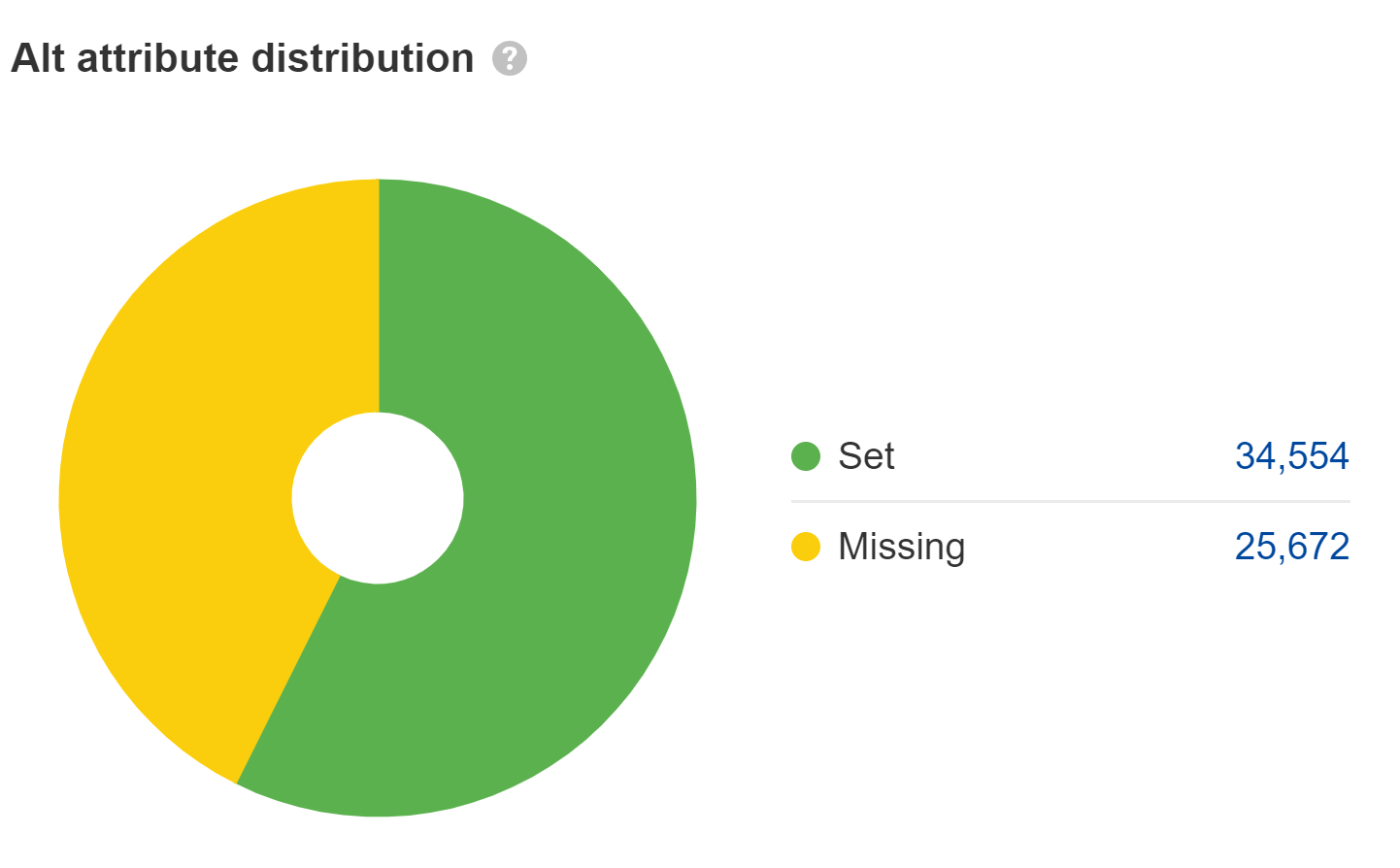
Your site might have crawl errors, duplicate content, or broken internal links. Google cannot index your products properly. An ecommerce seo specialist should have found and fixed these in month one. According to an Ahrefs study of over one million domains, 80.4% of websites are missing image alt attributes, 72.9% have missing or duplicate meta descriptions, and 72.3% have slow-loading pages. These are basic hygiene issues that any competent ecommerce seo specialist should catch in month one.
How to Check:
Open Google Search Console. Look at the Index Coverage report. Are there many “Excluded” or “Crawled – not indexed” pages for your products? If yes, technical issues are blocking progress.
The Fix:
Ask your agency for their technical audit report. If they cannot provide one, that is a red flag. They should have prioritized crawl and indexation blockers on your highest-value pages first.
Reason 2: They Are Targeting the Wrong Keywords
The Problem:
Your agency is ranking you for informational terms like “how to choose running shoes” instead of commercial terms like “buy running shoes size 10.” Traffic comes. Sales do not. For ecommerce product pages, the ranking factors that matter most in 2026 are product schema completeness (correlation 0.78), aggregated review ratings (0.68), and mobile LCP (0.71). Backlinks, while still strong, are no longer the single strongest factor for product pages.
How to Check:
Look at your top organic landing pages in Google Analytics. Are they product pages or blog posts? Look at top queries in Search Console. Do they show buying intent?
The Fix:
Ask your ecommerce seo specialist to show you their keyword strategy. The focus should be on commercial and transactional keywords, not just high-volume informational ones.
Reason 3: Your Product Content Is Too Thin
The Problem:
Google needs substance to rank products. If your product pages only have 50 words of copy, they will never rank. The 2026 ecommerce ranking study shows that product description depth correlates at 0.58 with rank position. It is not the strongest factor, but it matters. Meanwhile, raw word count alone correlates at only 0.10, meaning quality and specificity matter more than sheer length.
How to Check:
Pick your top 5 product pages. Count the unique words. Compare them to top-ranking competitors. Are they providing more information?
The Fix:
Ask your agency to audit product content depth. They should be adding detailed descriptions, spec tables, buyer guides, and FAQs that answer real customer questions.

Reason 4: Your Structured Data Is Missing or Broken
The Problem:
Product schema tells Google about price, availability, and reviews. Without it, you miss out on rich results in search. Shopping carousels may not show your products. In 2026, product schema completeness is the strongest single ranking factor for ecommerce product pages, with a correlation of 0.78. It has overtaken referring domain count (0.62) as the top factor. Aggregated review ratings (0.68) and product attribute schemas (0.66) are also among the top five.
How to Check:
Use Google’s Rich Results Test. Paste a product URL. Does it show a valid product schema? If errors appear or no schema exists, your agency missed a critical step.
The Fix:
Ensure your agency has implemented Product schema on all product pages. This is basic ai ecommerce seo audit work. Without it, your pages are invisible to Google’s shopping systems.
Reason 5: They Are Not Building Quality Backlinks
The Problem:
Ecommerce SEO needs authority. Without backlinks from relevant sites, your product pages will struggle. The 2026 backlink study of 85,000 ranking pages shows that 64.2% of pages have zero backlinks, and pages with backlinks generate 14.4x more organic clicks than pages without. Referring domain count correlates at 0.74 with rank position, the strongest single ranking factor across all page types.
For ecommerce specifically, pages in the top 5 positions have an average of 184 referring domains; pages at positions 6–10 have 62; pages at 11–20 have 22. Once a page crosses roughly 120 referring domains in its niche, marginal returns drop sharply.
How to Check:
Use a backlink tool like Ahrefs or SEMrush. How many domains link to your site compared to your top competitors?
The Fix:
Ask your agency about their link-building strategy. They should be earning editorial links, not buying them. Editorial review citations from tier-1 publishers correlate at 0.59, and each such citation is worth approximately 18 standard backlinks in correlation weight.
Reason 6: They Are Not Optimizing for Search Intent
The Problem:
Your agency is optimizing for the wrong search intent. Product pages should target commercial or transactional queries. If they target informational keywords, you attract researchers, not buyers.
The Four Intent Types:
| Intent | Query Example | Page Type |
| Informational | “how to clean hiking boots” | Blog post |
| Commercial | “best hiking boots 2026” | Category/best-of list |
| Transactional | “buy Merrell Moab 3 size 10” | Product page |
| Navigational | “Merrell official site” | Homepage |
How to Check:
Review your keyword mapping. Each product page should target transactional keywords. If you see “how to” queries driving traffic to product pages, intent is mismatched.
The Fix:
Ask your agency to explain their intent strategy. A good ecommerce seo consultant will have clear intent mapping for every keyword.
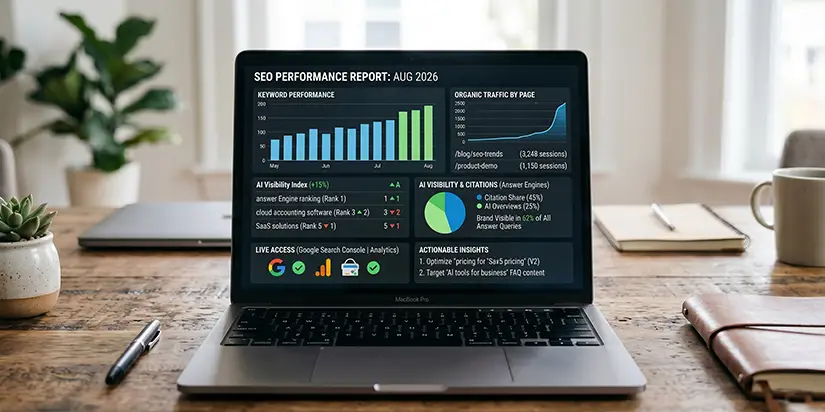
Reason 7: Your Agency Is Not Reporting Properly
The Problem:
Reports are vague. They show “impressions up” but not which keywords. They show “traffic increased” but not to which pages. They hide the data that matters. In 2026, seo reporting needs to include AI visibility metrics, how often your brand appears in AI Overviews and answer engines, not just traditional rankings.
What Good Reporting Includes:
- Keyword movements (which terms went up, which went down)
- Organic traffic by page (so you know what is working)
- AI visibility and citation share for your top product terms
- Actionable next steps (not just “we will continue optimizing”)
- Access to live data (Search Console, Analytics)
How to Check:
Ask for live access to Google Search Console and Analytics. If they refuse, that is a major red flag.
The Fix:
Demand access to your own data. A transparent agency has nothing to hide.
Reason 8: They Don’t Understand Ecommerce
The Problem:
Many SEO agencies are generalists. They do not understand ecommerce-specific issues: faceted navigation, product variants, crawl budget waste, shopping feeds, and seasonal trends. In 2026, SEO success depends on aligning content, category structures, and product data into a single, coherent discovery strategy.
How to Check:
Ask them: “How do you handle product variant pages?” or “What is your approach to faceted navigation?” If they look confused, they are not ecommerce experts.
The Fix:
Switch to an agency that specializes in ecommerce. Best ecommerce seo companies focus exclusively on online stores and understand the unique challenges of product-based SEO.
How to Audit Your Agency’s Work (Without Being Technical)
The 10-Minute DIY Audit
| What to Check | Where to Check | What to Look For |
| Indexed product pages | Google Search Console → Indexing | Are your important pages indexed? |
| Keyword rankings | Google Search Console → Performance | Search for your product names. Are you on page 1? |
| Organic traffic trends | Google Analytics → Acquisition → Organic | Flat line or upward trend? |
| Click-through rate | Google Search Console → Performance | Below 3% on important keywords? Titles may be weak |
| Mobile usability | Google Search Console → Mobile Usability | Any errors? |
Questions to Ask Your Agency Today
Use these questions to hold your ecommerce seo specialist accountable:
- “Show me the exact keyword rankings from three months ago vs. today.”
- “What technical issues did you find in your audit? Which have you fixed?”
- “Show me the backlinks you have earned for my site.”
- “What is your plan for AI visibility — how are you getting my products cited in AI Overviews?”
- “When do you expect to see Page 1 rankings for my top product terms?”
- “Can I have read-only access to Google Search Console and Analytics?”
Red Flags That Mean You Should Switch Agencies
| Red Flag | Why |
| Cannot explain their strategy | They are guessing or doing nothing |
| No access to your data | They are hiding poor performance |
| Promised rankings in 30 days | They lied about timelines |
| Focus only on blog content | Product pages are being ignored |
| Reports only show vanity metrics | “Impressions up” without context is meaningless |
| No clear answer on when to expect results | They have no plan |
Final Verdict
Four months is enough time to see whether an ecommerce seo specialist knows what they are doing. You should have seen a technical audit, on-page optimizations, structured data implementation, and first signs of ranking movement. If none of that has happened, your agency is failing you.
The best ecommerce seo consultants fix technical debt first, then build authority through quality backlinks and content, and now in 2026, also optimize for AI visibility. They do not promise rankings in 30 days. They show you clear, measurable progress by month three.
You do not have to settle for an agency that delivers nothing.
At Ingenious Netsoft, we specialize in ecommerce SEO. We do not take on every client. We focus on online stores that need real results.
What We Do Differently:
- Technical audit first: We fix what is broken before trying to rank
- Product page focus: We optimize the pages that actually drive revenue
- Commercial keywords only: No traffic for traffic’s sake. We target buyers.
- AI visibility strategy: We get your products cited in AI Overviews and answer engines
- Transparent reporting: You get live access to all data. No hiding.
- Monthly accountability: You see exactly what we did and what changed
Stop wasting money on agencies that do not deliver. Get a free, no-obligation Ecommerce SEO Audit. We will analyze your site, show you exactly what is wrong, and give you a clear roadmap to results.
Get Your Free Ecommerce SEO Audit