
My Competitor Ranks Number 1 Locally — What Are They Doing?
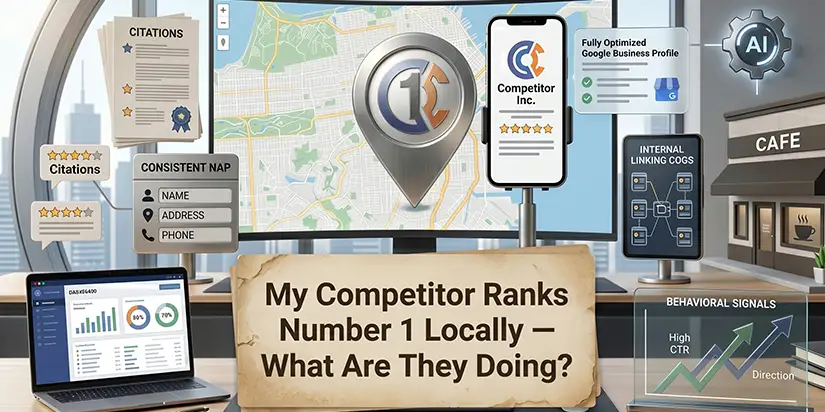
When a competitor sits at #1 in local results, it rarely comes down to a single “trick.” It is usually the result of layered advantages that compound over time across Google Business Profile strength, website authority, behavioral signals, and increasingly, AI-assisted optimization through local seo marketing services.
Table of Contents
Local SEO Ranking Factors That Help Competitors Dominate Local Results
1. Google Business Profile (GBP) is the Strongest Ranking Driver
Industry research consistently shows that Google Business Profile signals dominate local pack rankings.
According to 2025–2026 Local Search Ranking Factors study:
- GBP signals account for the largest share of local pack influence (~30%+).
- Includes category selection, completeness, engagement, and activity.
What top competitors do better:
- Correct primary + secondary categories.
- Fully completed services section.
- Frequent updates (posts, offers, Q&A).
- High-quality images and consistent activity.
2. Reviews are Now a Major Ranking Differentiator (not optional)
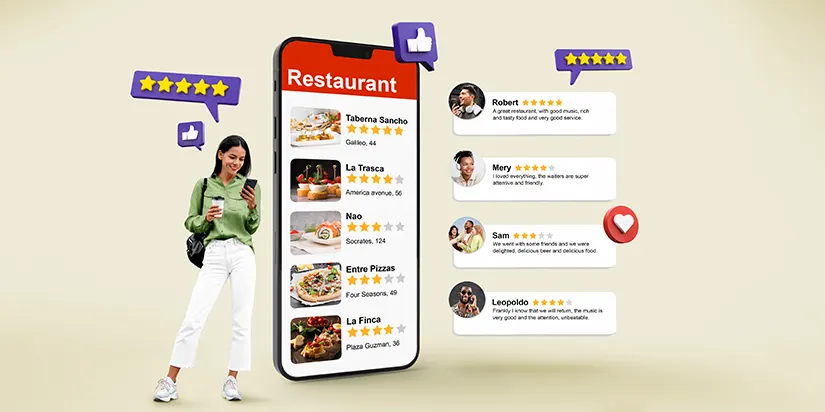
Recent data shows review signals are increasingly important, with consistency playing a bigger role than total count. They also help improve trust and visibility in local search results. Strong review systems are often managed through professional local SEO marketing services.
Recent data shows review signals are rising in importance:
- Reviews influence ~16–20% of local ranking weight in pack results.
- Review recency + frequency matters more than total count.
- Keyword-rich natural reviews improve topical relevance.
What top competitors do better:
- Steady weekly/monthly review flow (not random bursts).
- Owner responses with context (service + location reinforcement).
- Higher engagement rate on reviews.
3. On-page SEO Still Heavily Supports Local Rankings
Well-optimized pages help search engines better understand local intent and service relevance. While Google Business Profile is central, websites still matter significantly.
Studies show:
- On-page SEO contributes around 19–36% of ranking influence depending on local organic vs map pack.
- Strong alignment between website content and search intent increases visibility.
What top competitors do better:
- Dedicated location landing pages (city + service pairing).
- Clear internal linking between services and locations.
- Strong title tags aligned with GBP categories.
- Schema markup (Local Business structured data).
4. Citations and NAP Consistency Still Matter (Especially for Trust)
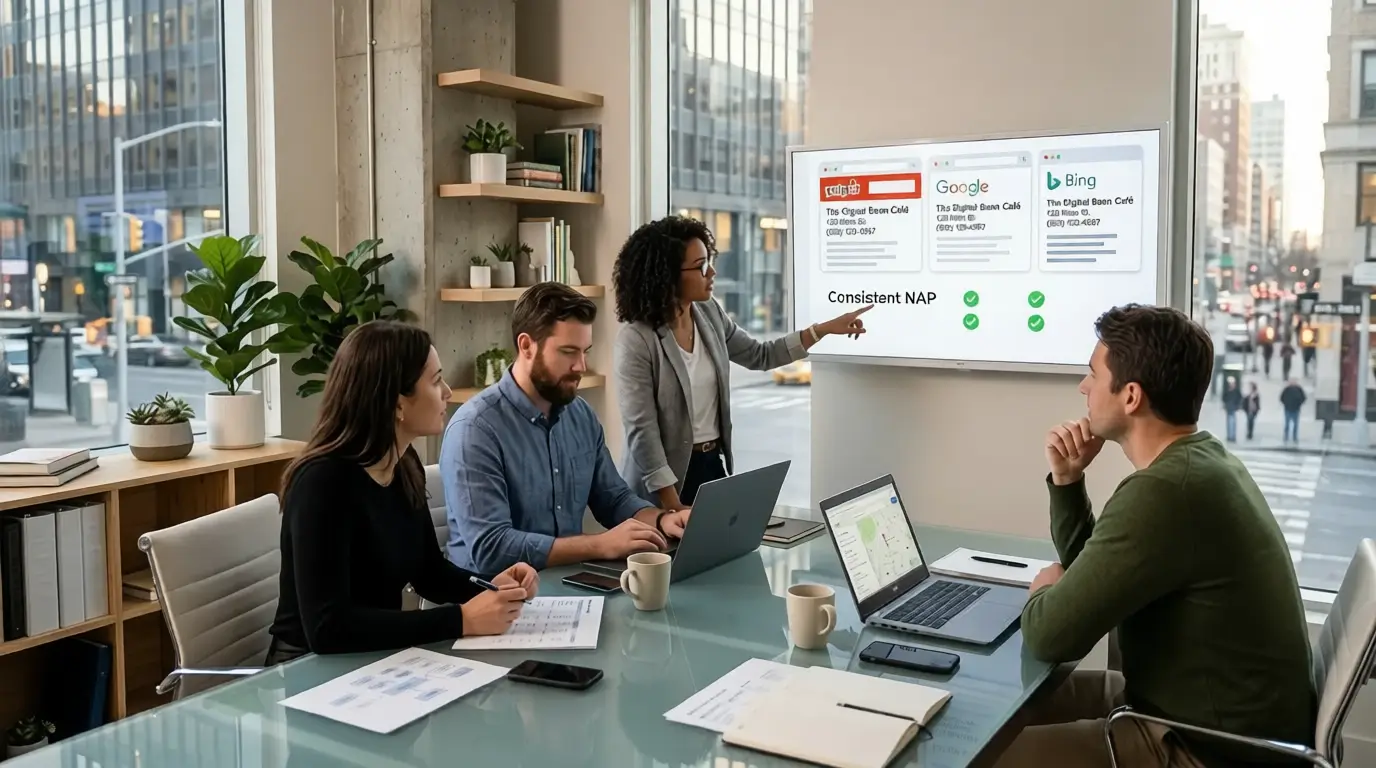
Citations remain a foundational trust layer that helps confirm business legitimacy across multiple platforms and directories. Consistent NAP details also strengthen overall search engine trust and credibility, often improved through local SEO optimization services.
Local research confirms:
- Citations still influence ~6–9% of ranking signals.
- Consistency across directories improves Google confidence in business legitimacy.
What top competitors do better:
- Same Name, Address, Phone across all platforms.
- Clean presence on high-authority directories.
- No duplicate listings or outdated profiles.
5. Behavioral Signals Separate #1 from #3–#5
Google tracks how users interact with listings, including clicks, calls, and direction requests. Higher engagement signals often lead to stronger visibility in local rankings.
Google evaluates how users interact with listings:
- Click-through rate from Maps.
- Calls directly from the listing.
- Direction requests.
- Website visits from GBP.
These are classified as behavioral signals and consistently rank as a top-tier factor group in SEO studies.
What top competitors do better:
- More attractive GBP listing (photos, reviews, relevance).
- Higher engagement due to stronger brand trust.
- Better conversion-focused landing pages.
6. Links Still Matter! But Only Locally Relevant Ones
Citations remain a foundational trust layer that helps confirm business legitimacy across multiple platforms and directories. Consistent NAP details also strengthen overall search engine trust and credibility, often improved through local SEO optimization services.
Local research confirms:
- Citations still influence ~6–9% of ranking signals.
- Consistency across directories improves Google confidence in business legitimacy.
What top competitors do better:
- Same Name, Address, Phone across all platforms.
- Clean presence on high-authority directories.
- No duplicate listings or outdated profiles.
5. Behavioral Signals Separate #1 from #3–#5
Google tracks how users interact with listings, including clicks, calls, and direction requests. Higher engagement signals often lead to stronger visibility in local rankings.
Google evaluates how users interact with listings:
- Click-through rate from Maps.
- Calls directly from the listing.
- Direction requests.
- Website visits from GBP.
These are classified as behavioral signals and consistently rank as a top-tier factor group in SEO studies.
What top competitors do better:
- More attractive GBP listing (photos, reviews, relevance).
- Higher engagement due to stronger brand trust.
- Better conversion-focused landing pages.
Local and industry-relevant backlinks help strengthen authority and trust signals. They also support long-term visibility in competitive local search results.
Link influence has reduced slightly in local pack ranking, but still matters for prominence:
- ~15–19% influence depending on study grouping.
- Local + industry-relevant links are strongest.
What top competitors do better:
- Local news mentions.
- Chamber of commerce listings.
- Industry associations.
- Regional blogs.
7. Competitors are now using AI-Powered Local SEO Systems
AI tools help track rankings, reviews, and competitor movements in real time. This allows faster decisions and more accurate local SEO improvements. Many agencies offering local SEO marketing solutions now rely heavily on automation.
Advanced agencies increasingly use:
- AI local SEO competitor analysis tools for geo-grid tracking.
- Automated review monitoring systems.
- Real-time rank tracking by neighborhood.
- AI-based content gap analysis.
These systems help them adjust faster than manual SEO workflows.
8. AI-driven “Entity Authority” is becoming a Ranking Layer
Search engines now evaluate brand presence and consistency across the web. Stronger entity signals improve overall local search visibility and trust.
Google now evaluates:
- Brand mentions across the web.
- Consistency of business identity.
- Authority signals from third-party sites.
This directly impacts AI-powered local rankings, where businesses with stronger real-world presence outperform others even with similar SEO setups.
Key Factors Summary Table
| Ranking Factor | What It Means | Why Competitors Win |
|---|---|---|
| Google Business Profile | Core visibility driver | Better optimisation + activity |
| Reviews | Trust + relevance signal | Consistent fresh reviews |
| On-page SEO | Website relevance support | Strong location pages |
| Citations | Business consistency | Clean, unified NAP data |
| Behavioral signals | User interaction metrics | Higher CTR + engagement |
| Local links | Geographic authority | Strong local mentions |
| AI optimisation | Competitive tracking | Faster decision-making |
| Entity authority | Brand recognition | Wider digital presence |
Bottom Line
Ranking #1 locally is not achieved through a single tactic but through consistent, multi-layered optimization involving Google Business Profile strength, reviews, citations, website relevance, and user engagement signals working together. Competitors who dominate search results typically rely on structured local SEO marketing services and ongoing local SEO optimization services to maintain visibility. Many also use AI local SEO competitor analysis to track gaps and refine strategies faster.
For businesses aiming to grow in AI-powered local rankings, partnering with experts like Ingenious Netsoft can help you build stronger visibility, improve local authority, and achieve long-term, sustainable search performance.


