


OpenAI Introduces Businesses in ChatGPT: Features, Benefits and How to Get Started
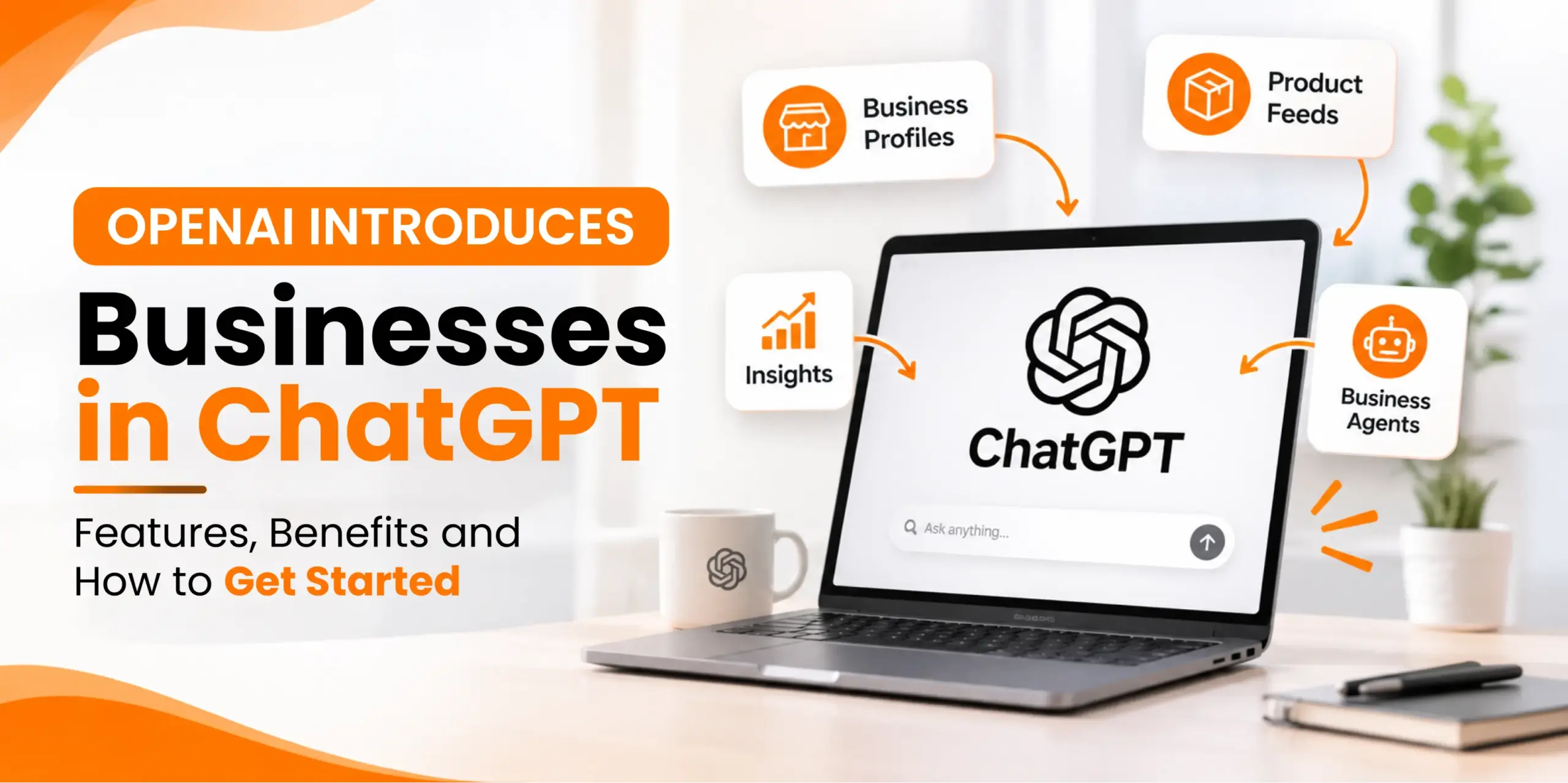
OpenAI has introduced a new way for companies to manage how they appear on ChatGPT. Announced on November 10, 2026, businesses in ChatGPT brings business profiles, product feeds and engagement insights into one place called Business Hub. Eligible companies can also create a Business Agent to answer customer questions using information they provide.
The launch gives businesses tools to keep key details current and understand how people interact with them on ChatGPT. However, profile management, agent publishing and advertising are separate activities. Access to some features also depends on business type and location.
Table of Contents
- What Information Should a Business Prepare?
- How Product Feeds Work
- What Do Businesses in ChatGPT Insights Actually Measure?
- How Should Marketers Use Discovery Topics?
- What Can ChatGPT Business Agents Do?
- Who Can Use Businesses in ChatGPT, and How Do You Set It Up?
- Do Businesses in ChatGPT Affect SEO and AI Search?
- Important Terms to Review Before You Join
- What Should Businesses Do After Joining Businesses in ChatGPT?
- Questions Businesses Are Likely to Ask
TL;DR: Businesses in ChatGPT
- OpenAI’s new Business Hub lets eligible companies claim and manage their business profiles on ChatGPT.
- Businesses can update company details, share product feeds and view insights into mentions, website clicks and discovery topics.
- Business Agents offer an additional way for eligible businesses to answer customer questions through ChatGPT.
- Profile access and agent availability depend on business location, type and verification.
- Claiming a profile does not guarantee higher rankings, more recommendations or sales.
What Are Businesses in ChatGPT?
Businesses in ChatGPT is OpenAI’s beta programme for business profiles, product information, engagement insights and customer-facing agents. Companies manage these tools through Business Hub after proving they own the business or are authorised to represent it.
It has three parts:
- Business Profile: A listing where an authorised representative can manage supported company information.
- Product Feed: Structured product details, including prices and availability, supplied by eligible businesses.
- Business Agent: An optional, clearly labelled agent that answers customer questions using company-provided information.
This gives ChatGPT for businesses a dedicated management interface. However, the features have different eligibility requirements. A company may claim a profile and access insights without qualifying to publish an agent.
What Can Businesses in ChatGPT Actually Control?
After verification, a business can update supported details such as its description, website, category, contact information, logo, delivery information and return policy. These Business Profiles on ChatGPT let companies submit current information rather than relying only on details gathered elsewhere.
But claiming a profile does not give a company exclusive control over its listing. OpenAI’s terms allow it to supplement, edit or replace submitted information using other sources, or choose not to display information. A listing may also remain on ChatGPT if the business has not claimed it or stops managing it.
Profile management lets a company contribute and correct information; it does not control every ChatGPT answer. A blue check appears only after Persona approves the representative’s identity and authority. Business claim approval and identity verification are separate steps.
What Information Should a Business Prepare?
OpenAI requires accurate business names, categories, addresses or service areas, opening hours, contact details and product or service information. Businesses must not submit fabricated reviews, unsupported guarantees, misleading prices or claims, or images and logos they do not have permission to use.
The business remains responsible for the information it submits. Compare the profile with official website content and business records before requesting publication. These ChatGPT business features are useful only when the underlying information is reliable.
How Product Feeds Work
Eligible retailers can submit product information through a supported Shopify connection, a CSV file that follows OpenAI’s specifications, or a hosted product-feed URL. A feed can include product names, descriptions, prices and availability.
The main operational challenge is keeping the feed and storefront aligned. OpenAI’s terms require businesses to address feed discrepancies, formatting errors and missing data when requested.
A product feed does not guarantee that ChatGPT will recommend an item. It also does not publish a Business Agent. Retailers should treat feed setup as product-data maintenance, not a shortcut to placement.
What Do Businesses in ChatGPT Insights Actually Measure?
Business Hub provides aggregated insights for the previous 28 days. OpenAI identifies three measures:
| Metric | What it measures | What it does not tell you |
| Mentions | For an online business, ChatGPT references its website. For a local business, ChatGPT displays a result for that location. | A brand name without a website reference does not count for an online business. |
| Website clicks | Clicks from ChatGPT to the business website. | Whether a visitor became a lead or customer. |
| Discovery topics | Common themes in answers that mention or cite the business. | Individual prompts or direct purchase intent. |
OpenAI does not share individual prompts or conversations, including Business Agent chats. Insights also appear only when activity meets privacy-related reporting thresholds.
A blank metric can mean activity is below the threshold, data is still being collected or reporting is unavailable. It should not automatically be read as zero.
How Should Marketers Use Discovery Topics?
Treat them as themes for reviewing website content, not as keyword-volume data. If a company appears in answers about product comparisons, check whether its pages explain specifications, differences, pricing conditions, and suitability. If service-related topics appear, review whether the relevant pages explain coverage and processes.
Do not infer exact queries or buying intent from these themes. Compare trends with website analytics and customer research. These ChatGPT business features show activity inside ChatGPT, not demand across all search or AI platforms.
What Can ChatGPT Business Agents Do?
Eligible companies can build, test and publish a ChatGPT Business Agent using company-provided information, product details, policies and instructions. A customer might ask it to compare two products, explain a return policy or clarify which features are included.
The agent is clearly labelled as representing the business. ChatGPT business agents are optional and do not replace the standard business profile. Their conversations are separate from the user’s main ChatGPT conversation and from ChatGPT’s independent answers. OpenAI says it does not share those conversations with the business.
An agent can explain products and policies and link to the business website, but it cannot complete purchases, bookings or order checks. Those actions happen on the company’s website. Publishing an agent is optional and separate from claiming a profile or running ads.
OpenAI’s terms make the business responsible for testing its agent, keeping supplied information current and correcting inaccuracies or unsafe behaviour. Test it with realistic questions about price, availability, returns, delivery and product suitability before publishing.
These AI Agents for Business are not a replacement for checkout or order-management systems. They are an additional pre-purchase information channel.
At launch, AI agents for business are available to eligible ecommerce and online service businesses that meet OpenAI’s industry requirements.
Who Can Use Businesses in ChatGPT, and How Do You Set It Up?
Eligibility depends on business type, location and verification. Eligible businesses in locations where ChatGPT is available can claim an existing profile or add one where supported. The person making the claim must own the company or be authorised to represent it.
Business Agents have narrower access. At launch, eligible ecommerce and online service businesses in the United States with a website may qualify. A business does not need an Ads account or ChatGPT Enterprise agreement simply to claim an eligible profile. Shopify is not mandatory for creating an agent; it is one supported verification and product-feed option.
To claim a profile:
- Open Business Hub: Sign in to ChatGPT and open Business Hub from the sidebar.
- Find the Business: Select the matching listing. An eligible online business may be able to add a profile if no listing appears.
- Verify the Business: Use the method offered, such as a business phone, business email, website DNS record or Shopify connection.
- Wait for Approval: OpenAI reviews the claim and emails its decision or requests more information.
- Complete Persona Verification: After the claim is approved, verify your identity and authority. You may be asked for government ID, business registration information or proof of authorisation.
- Update the Profile: Review the description, website, category, contact information, images and policies. Add a feed or create an agent if eligible.
If another person has claimed the business, an authorised representative can select Dispute ownership from the profile menu and complete verification. This resolves profile access; it does not improve the business’s placement in ChatGPT.
Do Businesses in ChatGPT Affect SEO and AI Search?
Business Hub adds another channel for managing business information and measuring ChatGPT visibility. However, it does not replace your website, technical SEO, product pages, local listings or analytics. Claiming a profile also does not guarantee better rankings, recommendations or traffic.
Keep business details, product information and policies accurate across your digital platforms. Use Business Hub insights to understand mentions, website clicks and common discovery topics, but remember that they do not reveal exact prompts or prove purchase intent.
For a clearer picture of performance, combine these insights with website traffic, enquiries, conversions and customer feedback. This helps businesses make informed decisions when using ChatGPT for business visibility.
Important Terms to Review Before You Join
OpenAI’s terms make businesses responsible for the data and instructions they submit and for testing agents they publish. They also state that creating or previewing an agent does not make it public; the business must choose to publish it.
Two less obvious points deserve attention. First, OpenAI’s terms say the licence for basic business information submitted for public display, such as name, address, contact details, category, hours and website, is perpetual and irrevocable.
Second, businesses may use Insight Data only to measure, analyse, optimise and report on their use of the service. The terms restrict using it to identify individuals, build user profiles or create targeted audiences.
Each distinct brand is managed separately. Centralised parent-company management across brands and locations is not currently available.
What Should Businesses Do After Joining Businesses in ChatGPT?
The platform is most useful when a company has accurate information and someone responsible for maintaining it. Before claiming a profile, prepare official business details, confirm who is authorised to manage it, and review image, product and policy information.
After verification, establish a baseline for mentions, clicks and discovery topics. Review those figures alongside website analytics rather than treating them as standalone performance results. If the company qualifies for an agent, test it thoroughly and make sure its answers reflect current policies and products.
For organisations adopting ChatGPT for businesses, the opportunity is not guaranteed visibility. It is a way to manage submitted information, measure selected ChatGPT interactions and offer an optional business-led conversation.
How Ingenious Netsoft Supports Business Growth
As AI-powered platforms continue to change how people find businesses, having accurate information and a well-optimised website is becoming increasingly important. Ingenious Netsoft helps businesses strengthen their digital presence through SEO, website development, content marketing and digital solutions.
From improving website performance to creating useful, search-focused content, our team helps businesses build a stronger online foundation and stay prepared for evolving search experiences.


