
Spent $50K on a Mobile App and Nobody Downloads It – What Went Wrong?
You hired a developer. Paid $50,000. Got a working app. Everything is amazing. The code is clean, the UX is smooth, the features are innovative. You’ve poured your heart, soul, and probably way too many sleepless nights into this thing.
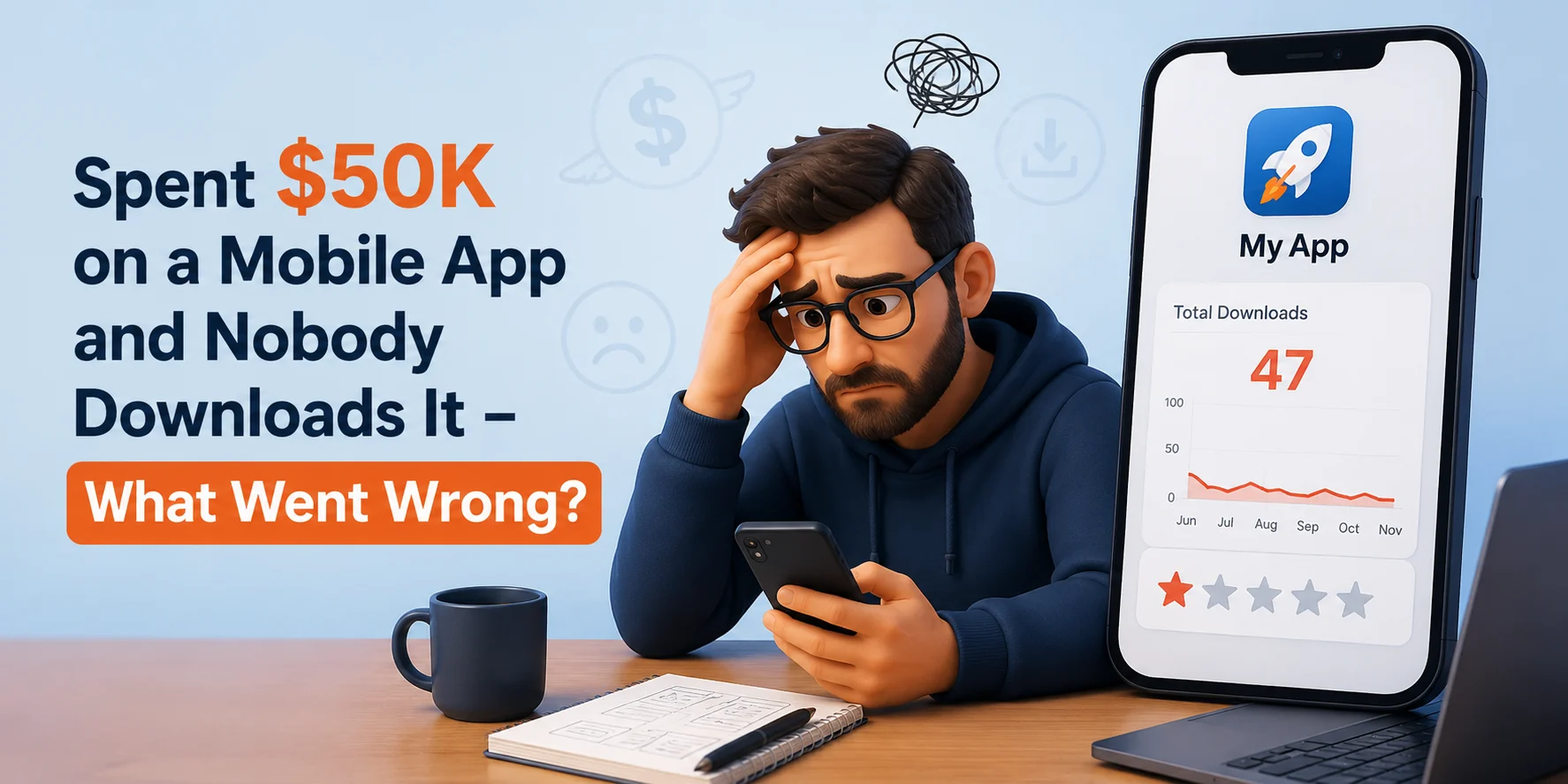
Now it’s been live for 6 months and your download counter still reads 47, most of them friends and family.
You’re not alone. According to Statista data analyzed, more than 68% of apps on Google Play never cross 1,000 downloads. The same research suggests roughly 99.5% of consumer apps fail to hit any meaningful definition of success, and “no downloads” is almost always the first symptom.
So what went wrong? In our 15+ years providing mobile app development services to clients across the USA, UK, and Canada, we’ve seen the same nine mistakes repeat almost every time.
This guide walks through each, and tells you whether your app is worth saving, rebuilding, or starting over.
Table of Contents
- You Built the App Before Validating the Market
- Your App Store Listing Is Invisible
- You Launched With No Marketing Budget
- Your Onboarding Experience Kills Retention
- Your App Has Performance Problems
- No Reviews Means No Trust
- You Chose the Wrong Platform
- Nobody Knows Your App Exists
- You Picked the Wrong Development Partner
- Successful Apps vs Failed Apps
- Conclusion
- FAQs
First, the brutal truth – building the app was only 30% of the job
Most founders think the work ends when the app goes live. It doesn’t. Building is the easy part. The 70% that decides success or failure happens after launch: marketing, ASO, retention, support, iteration.
If your mobile app developer handed you a finished app and walked away, that’s not a complete project, that’s a half-finished one. Quality mobile app development services include launch planning, store optimization, and post-launch support, not just code.
With that framing, here are the nine reasons your app isn’t getting downloads.
Reason 1: You Built the App Before Validating the Audience
This is the single biggest killer. Industry data shows that roughly 42% of app failures trace back to building something nobody actually wants, there’s no real market need.
The pattern is always the same:
- A founder has a “great idea”
- They skip user research and competitor analysis
- They pay for development based on assumptions
- The app launches into a market that doesn’t exist
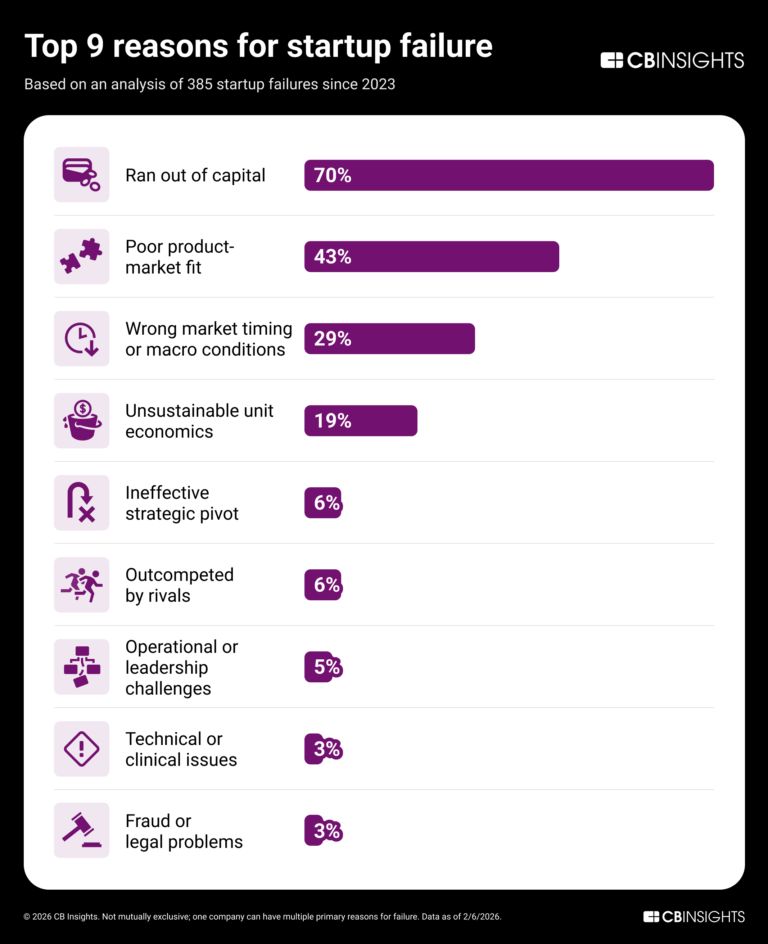
CB Insights’ well-known Top 12 Reasons Startups Fail report consistently ranks “no market need” as the #1 cause of startup death, and apps are no exception.
The Fix: Before another dollar goes into development, talk to 30 potential users. Not friends. Real strangers in your target market. If at least half can’t articulate the problem your app solves in their own words, you don’t have product-market fit yet.
Reason 2. Your App Store Listing Is Practically Invisible
This one is heartbreaking because it’s so fixable. Apple’s own data shows that roughly 65% of App Store downloads come from search, according to App Store Connect insights cited by AppTweak. If your app doesn’t show up when people search for it, you don’t exist.
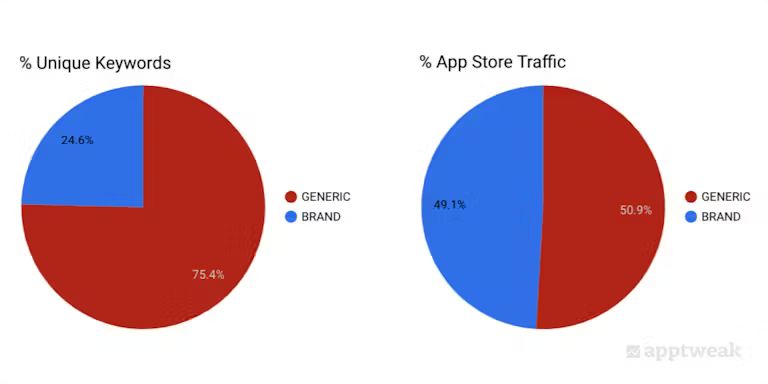
This is where ASO (App Store Optimization) comes in. Studies analyzed by AppTweak suggest a structured ASO strategy can lift downloads by 9–12% on average, and screenshot A/B testing alone produces a median conversion lift of around 11.8%.
The most common ASO mistakes we see on failed apps:
- Generic app icon that doesn’t stand out
- Screenshots that show empty UI instead of value
- Title with no searchable keywords
- Description written by the developer, not a marketer
- Zero localization for non-English markets
The Fix: Treat your app store page like a landing page. The first three screenshots do 80% of the work, make them visual, value-focused, and customer-centric. Keep ASO assets fresh; top-performing apps refresh their screenshots 2–4 times per year on iOS and even more often on Google Play.
Reason 3. You Launched With Zero Marketing Budget
Here’s a hard truth: most professional app marketers recommend setting aside a marketing budget that’s roughly equal to or greater than your development budget.
Spent $50K building? Plan for at least another $30K–$50K to get it noticed.
The “build it and they will come” myth has killed more apps than bad code ever has. Even excellent apps need:
- Paid user acquisition (Apple Search Ads, Google App campaigns, Meta)
- Content marketing and SEO
- Influencer or creator partnerships
- PR and launch coverage
- Referral programs
The Fix: If you have nothing left in the budget after building, stop and raise more or scale your scope down. A $50K app with no marketing budget will perform worse than a $20K MVP with $30K behind it.
Reason 4: Onboarding Kills 70% of Your Users in the First 30 Seconds
Even when downloads start trickling in, the next disaster strikes. According to Buildfire’s 2026 mobile app statistics, about 71% of users churn within the first 90 days — and most of that churn happens in the first session.
If a new user opens your app and:
- Sees a login wall before any value
- Gets hit with 5 permission requests upfront
- Is forced through a 6-screen tutorial
- Can’t figure out what to do first
…they’re gone, and they won’t be back. Research by Nielsen Norman Group on mobile UX consistently shows that users decide whether to keep an app within seconds of first open.
The Fix: Audit your first-run experience. Can a user reach a “wow moment” within 30 seconds without signing up? If not, that’s your highest-priority redesign. Often a mobile app UI/UX redesign is cheaper than rebuilding the whole product, and can 2–3x your retention.
Reason 5: The App Crashes, Lags, or Drains Battery
Cheap development creates expensive bugs. Industry data from AppsFlyer benchmarks shows that performance problems are among the top three reasons users uninstall an app, alongside crashes, confusing onboarding, and excessive permissions.
If your developer cut corners on:
- Memory management
- Backend infrastructure
- Crash reporting and analytics
- Cross-device testing
- iOS / Android version compatibility
…you’ll see it in your reviews. And those reviews will sink future downloads (more on that next).
The Fix: Get a code audit from an experienced mobile app development company that doesn’t depend on selling you the original build. Often 80% of crashes come from 20% of the code, fixable in weeks, not months.
Reason 6: No Reviews, No Social Proof, No Trust
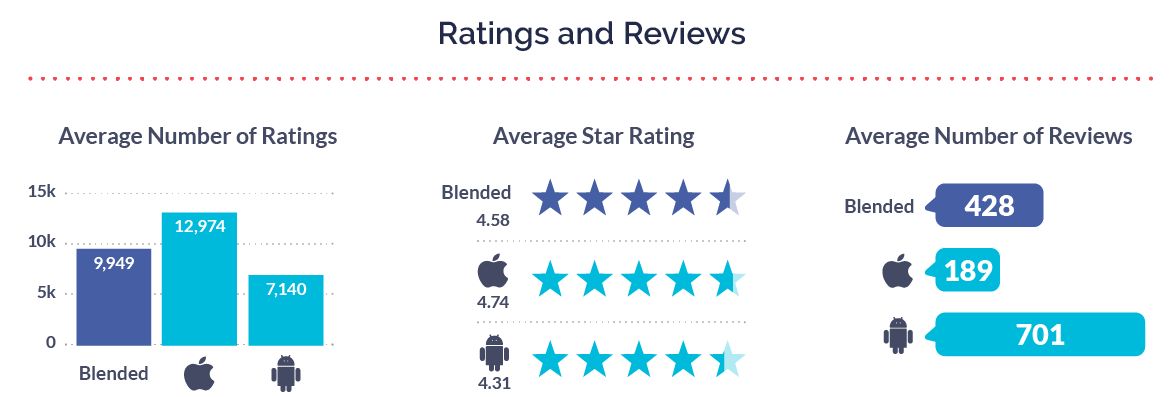
This is the silent killer. Research analyzed by Apptentive found that roughly 79% of users check ratings before downloading, and apps with ratings under 4.0 stars see install conversion rates 30–40% lower than apps rated 4.5+.
Your app probably has either:
- Zero reviews (looks abandoned)
- 3 negative reviews from bugs (looks broken)
- 12 fake-looking 5-star reviews (looks shady)
App store algorithms also weight review velocity, so an app with 50 reviews this month outranks one with 200 from two years ago.
The Fix: Build in-app review prompts that trigger after a positive moment (completing a task, hitting a milestone). Reply to every review, especially negative ones. Update the app regularly to keep recent reviewers happy.
Reason 7: Wrong Platform Choice for Your Audience
We’ve seen this many times. A US founder builds iOS-only, then discovers their target audience in India, Brazil, or Southeast Asia is 90% on Android. Or a B2B founder builds for both platforms when 95% of their buyers are on iPad.
Platform choice should be a data-driven decision based on your target market, not a developer’s preference.
The Fix: Before building, pull country and device data from your existing website analytics. If you’re pre-launch, look at platform share in your geographic market. India and Brazil skew Android strongly. The US and UK skew more towards iOS. Choose accordingly, or build cross-platform with Flutter or React Native if budget allows.
Reason 8: Nobody Knows Your App Exists
Discovery is everything. There were roughly 324 billion app downloads projected globally in 2026, but they’re distributed across millions of apps. The default state of any new app is invisibility.
Beyond ASO and paid ads, your app needs:
- A landing page that ranks for relevant keywords
- Content marketing (blog posts, videos, comparisons)
- Listings on review sites (Product Hunt, AlternativeTo, Capterra if B2B)
- Coverage from niche publications or newsletters
- Active social presence in communities where your users hang out
The Fix: Plan a 12-week post-launch marketing calendar before you launch. Not after. Apps that have a content + paid + community strategy from day one consistently outperform “launch and pray” apps by 5–10x in download volume.
Reason 9: You Picked the Wrong Development Partner
Here’s the one nobody wants to admit. If your app has architecture problems, terrible UX, no analytics, no app store assets, and zero post-launch support, those aren’t bad luck. Those are signs your development partner sold you code, not a product.
A real mobile app development partner should have delivered:
- A pre-development discovery and strategy phase
- A working MVP with analytics built in
- Production-grade backend infrastructure
- Store-ready ASO assets (icon, screenshots, copy)
- A launch plan
- Post-launch maintenance and bug-fix support
- Documentation you can hand to another team if you switch
If you only got “the code,” you got 30% of what you paid for.
How to Recover: Rebuild, Redesign, or Restart?
So you’ve identified the problem. Now what?
| Option | Best For | Estimated Cost |
|---|---|---|
| Option 1: Redesign | Best if the core product is sound but UX, onboarding, or ASO is broken. A focused UX redesign + ASO refresh can dramatically lift downloads without rebuilding the whole app. | 10–25% of original cost |
| Option 2: Refactor + Redesign | Best if you have performance problems, crashes, or scaling issues alongside UX problems. The code base is salvageable but needs serious work. | 30–50% of original cost |
| Option 3: Full Rebuild | Best if the architecture is fundamentally broken, you’re on the wrong tech stack, or the original developer disappeared without documentation. Sometimes starting over is cheaper than untangling spaghetti. | 70–100% of original cost |
| Option 4: Pivot or Sunset | If user research reveals there’s genuinely no market for the app, the bravest decision is to stop. Better to lose $50K than to throw another $50K after it. | Depends on business decision |
The right path depends on a real technical and product audit, not guesswork.
Get a Free App Audit
If you’ve spent money on an app that isn’t performing, the worst thing you can do is keep spending without understanding what’s broken.
Our team at Ingenious Netsoft has shipped mobile apps for clients across the USA, UK, Canada, and Australia for 15+ years. We offer a free 30-minute app audit where we review your code, UX, store listing, and analytics, and tell you honestly whether your app is worth saving, rebuilding, or starting over.
Get your free app audit | Schedule a call
Final Thought
Spending $50,000 on an app that nobody downloads feels like a disaster. But here’s what 15 years of building apps has taught us: most failed apps are recoverable. The problem is almost never the technology. It’s the strategy around the technology, research, ASO, UX, marketing, and ongoing support.
If you got 30% of what you paid for the first time, the next 70% doesn’t have to cost another $50K. It usually costs far less, if you work with a partner who understands the full lifecycle, not just the build.
Need help diagnosing what went wrong with your app? Get a free app audit from Ingenious Netsoft . We’ll review your code, UX, and store presence and give you an honest assessment in 30 minutes.
Related reading:
- Why Does Social Media Get Likes But Zero Business Enquiries?
- Running Google Ads and Getting Clicks but Zero Leads — Why?


